Licensed vs scraped vs synthetic video: what makes great AI training data
Scraped, synthetic or licensed? How the three main sources of video training data compare, and which one to build your model on.
By Ashleigh Johnson,
A video model can only learn what its training footage shows it. Blurry re-uploads, watermarked clips and generated footage that gets physics slightly wrong all end up in how the model behaves. This article compares the three main sources of video data (scraped, synthetic and licensed) on what matters most to an AI team: quality, coverage, and whether you can keep using the data once the model ships.
Scraped video is cheap to collect, but it's noisy, duplicated and skewed towards whatever went viral, and you may have to pull it out later. Synthetic video is clean and perfectly labelled, but it can only remix what its generator has already seen. Licensed video costs more upfront. In return you get original files, detailed metadata, footage sourced to fill your model's gaps, and the right to keep using it.
You need to know where it came from. Customers, partners and regulators increasingly ask what a model was trained on, and in the EU general-purpose model providers now have to publish a summary. That's far easier when every clip has a record behind it.
Video is the hardest case. A single clip can include faces, voices, music, logos and location data alongside the footage itself. Each of those needs handling before the clip is ready to train on.
Our recommendation is to build on licensed real-world footage, use synthetic data to fill specific gaps on top of it, and phase scraped data out over time rather than adding more of it.
Why where your video comes from matters more now
AI teams used to ask how much footage they could get. Now customers, partners and regulators also want to know where it came from. A few recent changes explain why.
Video makes all of this harder. A single 30-second clip might include someone's original footage, a bystander's face, a music track, visible logos and GPS data. Scraping picks up all of it with no record of who agreed to what, and no easy way to clean it up afterwards.
How the three sources compare
Scraped data saves money now and causes problems later. Licensed data costs more now and brings fewer surprises. Synthetic sits in between, and how good it is depends on what the generator learned from.
Scraped video: cheap now, costly later
Scraped footage looks like a shortcut. In practice, its problems grow with every training run that uses it.
It can't be unlearned cheaply. If footage has to come out after a complaint, the usual fix is retraining the model without it. That's slow and expensive.
It's hard to vouch for. Enterprise customers and acquirers increasingly ask what a model was trained on. With scraped data there's often no good answer.
It's lower quality than it looks. Re-uploads, heavy compression, burned-in watermarks and captions, and missing context all waste compute. Worse, the model learns the artefacts.
It carries people, not just pixels. Scraped clips are full of bystanders who never agreed to be in a training set. Posting a video publicly isn't the same as agreeing to that.
The free supply is closing. Platforms are tightening their terms, blocking bulk downloads and licensing their own archives. There will be less to scrape every year.
Synthetic video: good for gaps, weak as a base
Synthetic video is very good at some jobs: rare edge cases, controlled variations, stand-ins for real people and simulations with perfect labels. As a replacement for real footage, it's much weaker.
Model collapse is real. Shumailov et al. (Nature, 2024) showed that models trained recursively on generated data lose the tails of the distribution first, the rare, surprising moments that make video models robust.
It inherits its generator's problems. If the generator learned from scraped footage, its output carries the same baggage. Ask what it was trained on.
Physics drifts. Generated video still gets object permanence, hands, liquids and cause and effect wrong. Train on it and the model learns those mistakes.
It can't show what it hasn't seen. A generator can only recombine what it was trained on. New real-world coverage has to come from someone with a camera.
In practice, build every synthetic set on top of real licensed footage, and keep an eye on the ratio of real to synthetic as a quality measure.
Licensed video: what to check before you buy
A licence label on its own doesn't tell you much. Before you sign, a supplier should be able to answer these eight questions about any clip.
Where it came from. Did the supplier get it from the person who filmed it, or can they show the chain back to them?
What you can do with it. Does the licence cover AI training, for as long as the model is in use, everywhere you operate?
Third-party content. Have music, artwork and logos been cleared or removed?
People in frame. How are recognisable faces and voices handled? Releases, filtering and blurring are all options.
Originals, not re-encodes. Do you get the source files at full quality, with their technical metadata intact?
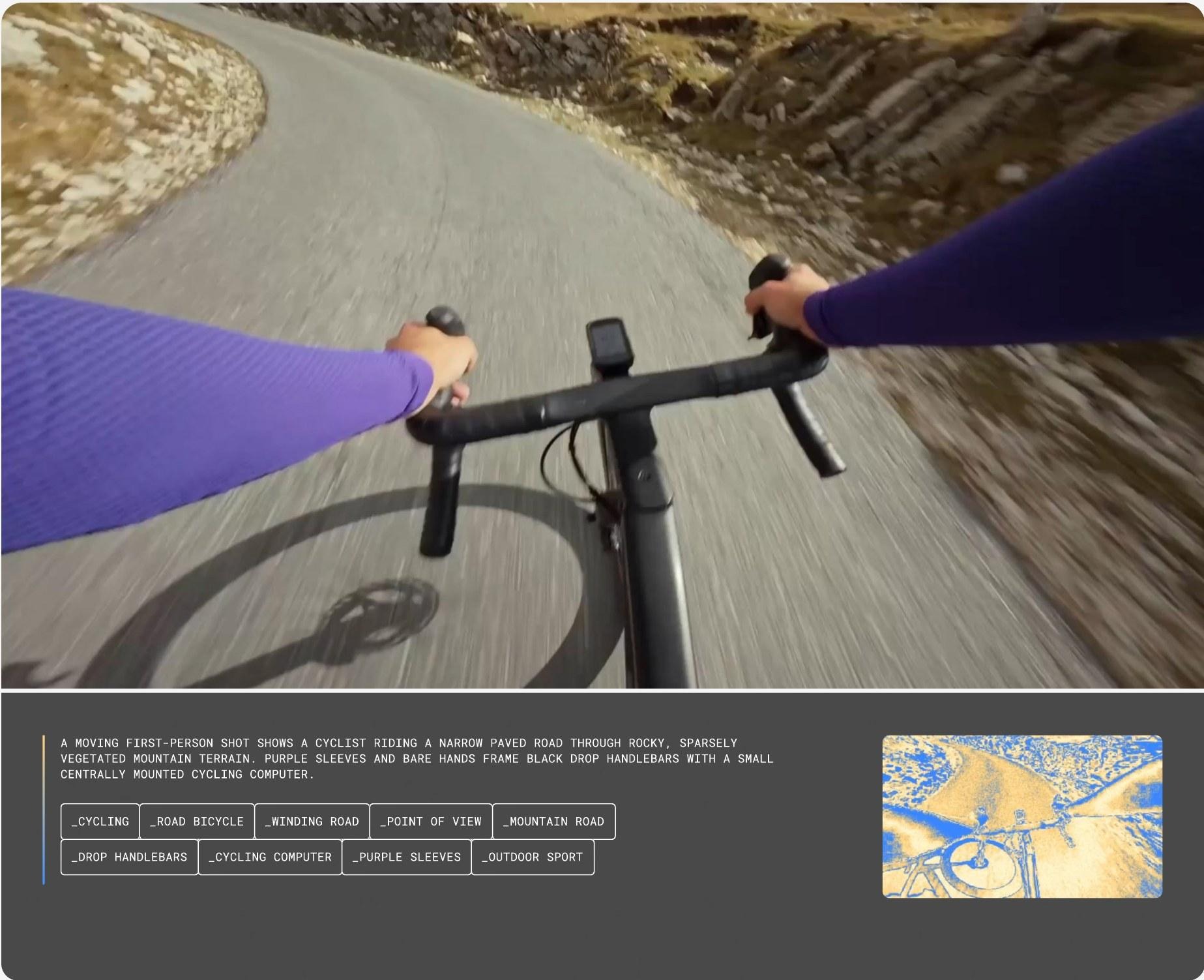
Metadata depth. Does each clip come with descriptions, tags and detected objects and actions your pipeline can use straight away?
Records per clip. Can the supplier show where any single clip came from if a customer or regulator asks?
Who stands behind it. Will the supplier back up the rights in the contract?
If a supplier can't answer all eight, keep looking.
Putting it together, and where Motion56 fits
We think the best video models will be trained on three layers of data, each doing a different job.
Foundation: licensed real-world footage. Most of the training data, with clear rights and detailed metadata.
Extension: synthetic data generated on top of it. Edge cases, variations and privacy-safe stand-ins, tied back to the licensed base.
Phase-out: older scraped data. Work out what you have, keep it separate, and replace it as licensed footage becomes available.
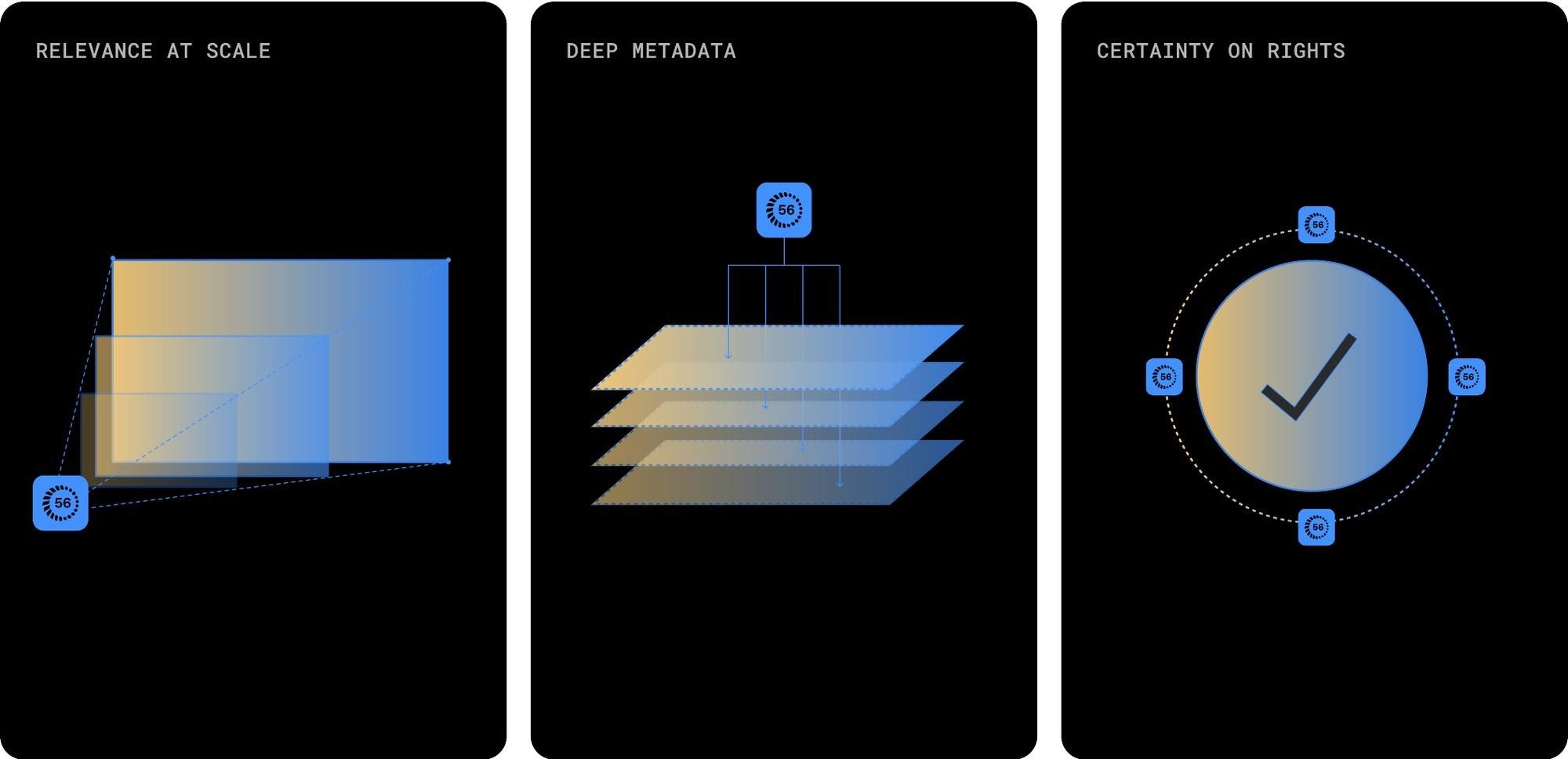
Motion56 licenses real-world, multimodal video for AI training. We work directly with content owners, which gives us varied footage of real life: first-person, unposed and full of movement. Every clip comes with structured descriptions, semantic tags and detected objects and actions. And when a model needs something specific, we go out and source it.
Progress starts with partnership. Let's teach AI the right way.