Video archive digitisation: why tape can't wait
Video archive digitisation decides whether footage on tape survives, and whether it can ever be licensed. Why archivists set 2025 as a deadline, what is at risk and what to do first.
By Paul Botha,
Footage on magnetic tape is running out of time. Tapes degrade and the machines that play them are disappearing, so archivists warned that routine transfer of tape would become hard after about 2025. Until footage is digitised it cannot be searched, described or licensed, so digitising comes before anything else.
What was Deadline 2025, and has it passed?
Deadline 2025 was a warning, not a cliff edge. In 2015 Australia's National Film and Sound Archive published Deadline 2025: Collections at Risk, arguing that most tape not digitised by 2025 would be lost. The same year UNESCO warned that only 10 to 15 years were left to transfer audiovisual recordings.
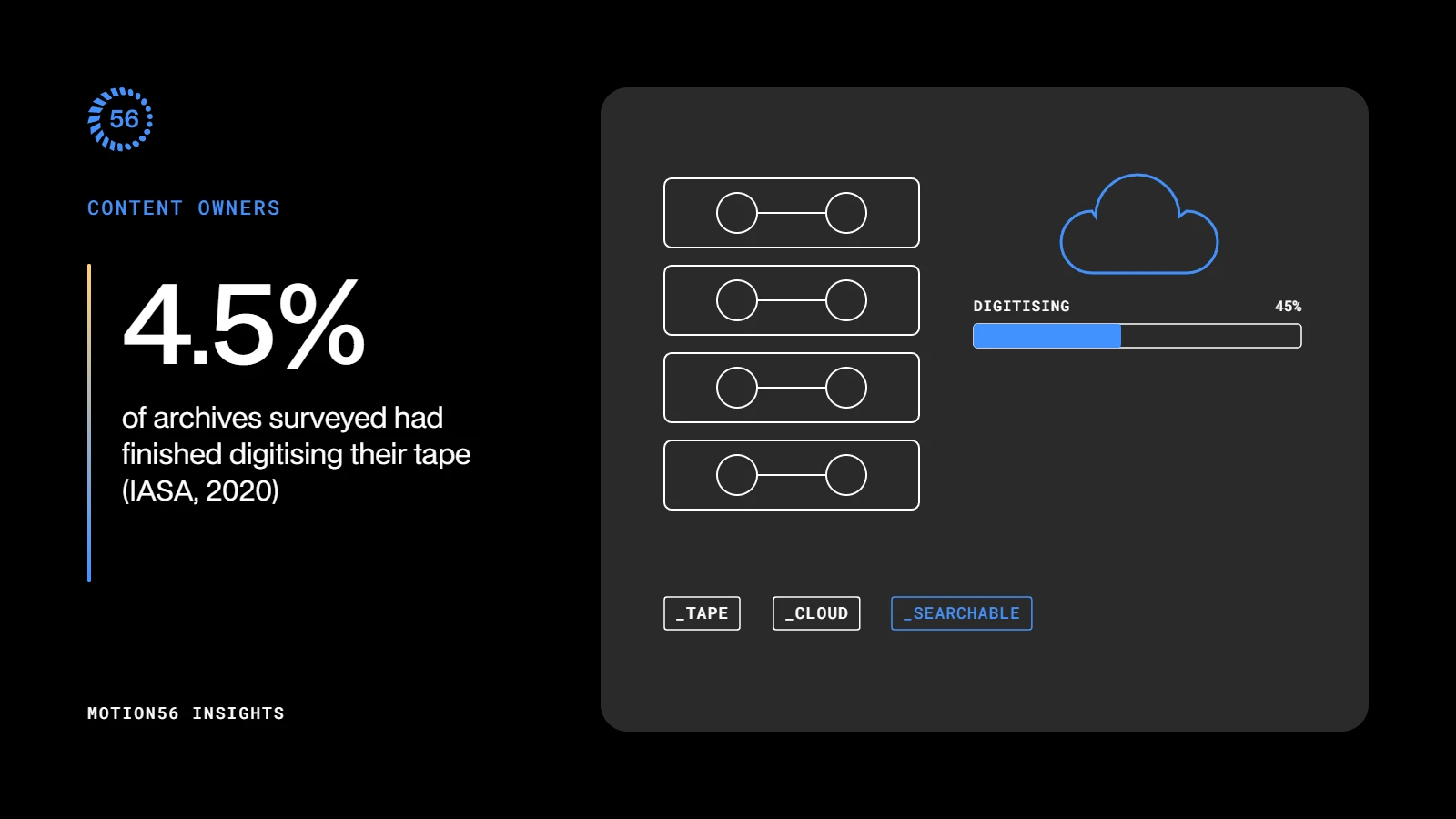
A 2020 survey by IASA and UNESCO, the Magnetic Tape Alert Project, estimated that routine transfer of magnetic tape would end around 2025. It drew 411 submissions from 76 countries, covering about 8.5 million items, 4.1 million of them video. Only 16 of 355 respondents, 4.5%, had finished digitising their tape.
The archive that coined the deadline now says another ten years of work is realistic for some collections, and that well-stored tape can last longer. The risk has not gone away. It has become a question of which tapes, and how soon.
How long does magnetic video tape last?
It depends on the format and how it has been stored. Australia's archive says some formats can last 50 years or more in good conditions, while tape kept in heat or damp can fail much sooner. In practice the machine is usually the weaker link: a tape is only readable while a working player and someone who can maintain it still exist.
Why are tape playback machines disappearing?
Because nobody makes them. Spare parts and service are fading, and the engineers who maintain the machines are retiring. At a FIAT/IFTA preservation seminar in June 2025, one speaker described five machines being cannibalised to rebuild one. Indiana University, whose media preservation programme digitised more than 350,000 items, calls the mix of decay and obsolescence "degralescence".
How much is at risk?
No one has a reliable global figure. The national programmes give a sense of scale. Indiana University's programme digitised 97,395 video recordings and 302,981 hours of content in all. Australia's archive committed A$41.9 million over four years and was on track for 140,000 objects digitised, and its 2024 to 2025 annual report puts the urgency in one phrase.
Before deterioration of tapes and machines made recovery impossible.
National Film and Sound Archive of Australia, Annual Report 2024 to 2025
Should you digitise your archive before licensing it?
Yes. AI teams search, sample and select footage digitally. Footage that exists only on tape cannot be described by machine, matched to a brief or delivered. The Netherlands Institute for Sound and Vision, the Dutch national broadcast archive, marks automatic speech recognition as currently impossible for any item without a digital file.
Video archive digitisation: where to start
List what you hold: formats, quantities and condition.
Put the formats most at risk, and footage nobody else holds, first.
Check what you own before spending money. Rights decide what can be licensed.
Digitise to a preservation master and a lighter copy for viewing.
Store it in the cloud, where it can be read, described and delivered.
Describe it, so it can be searched by what happens in it.
Motion56 helps owners at each stage after the tape: archive to cloud, metadata and representation. Our metadata services read footage from cloud storage, and footage held anywhere else is moved onto a server first for an extra fee. We take collections of 500 hours or more, less for rare material. See metadata for AI training data for what buyers need once footage is digital, and licensing your video archive for AI training for the rest of the process.